
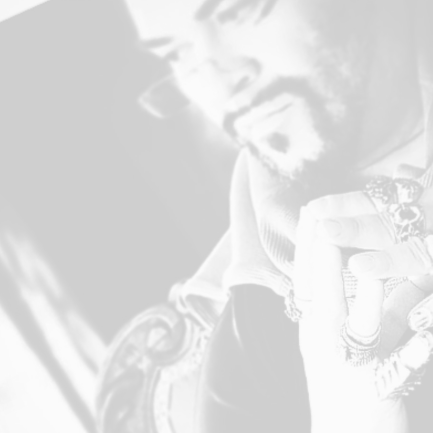
Sculptor, painter, and film maker. Founder of “The Neurophysiological Shapings Concept”.
THE STATEMENT
Through my work, I do not follow trends, but rather create affective systems between the body, color, and algorithm for unexpected and unprecedented experiences. Or, as I like to say, I create a continuity between body, affect, and system.
THE SENSORY LAYER
For me, the visual and emotional experience is primary. And for this, the artwork must be experienced, rather than immediately understood.
THE SENSORY LAYER
For me, the visual and emotional experience is primary. And for this, the artwork must be experienced, rather than immediately understood.
THE TRANSITION
Beyond the surface, I seek to explore the relationship between mind, matter, and technology as a living system, rather than as separate tools as they are usually perceived.
CORTEXTUALISM
And I have formulated this approach within a conceptual framework called cortextualism, a living system that redefines contemporary sculpture. I view it as a transdisciplinary practice in which: consciousness no longer produces form; it becomes form. Matter no longer supports thought; it is thought. Technology is no longer an instrument; it pulsates like a second brain. Sculpture thus becomes a self-reflexive system: the brain shapes form, and form shapes the brain, an infinite loop of cognitive co-generation.
THE MANIFESTO
My practice shifts sculpture from form to system, from representation to process. I create structures in which the body, emotion, and algorithm become a single flow, and the work is no longer something to be viewed, but something that happens in real time. Cortextualism is a mutation: consciousness becomes material, matter becomes visible thought, and technology ceases to be an instrument and becomes an extension of the mind. Here, sculpture is a self-reflexive system in which the brain shapes form, and form shapes the brain. It is not interactive art, but rather the co-generator of cognitive reality.
The work does not stand on a pedestal; it happens in consciousness.
I am Bogdan Lascăr, a contemporary sculptor and PhD in visual arts, and in my art I investigate the intersection of sculpture, cognition, and technology as a living practice. I am the founder of Cortextualism, a theoretical and artistic framework in which I redefine sculpture as a neuro-technological process and a cognitive ecosystem.
THE SHAPER
I’ve had the privilege of exhibiting in many places around the world, but one of the moments that has stayed with me was the exhibition at the Armani Space in the Burj Khalifa, in Dubai. It was a validation that what I create reaches beyond me, to people, to their emotions. I have also received recognition, such as the UNESCO Gold Medal, Athens, Greece, offered by the UNESCO Club of the Department of Piraeus and Islands, but beyond any award, what motivates me remains the same: the need to understand and express what it means to be human. For me, art is a process, a continuous transformation, a dialogue between who we are and who we could become, and I’m glad you’re here to share this adventure together!
AWARDS
- 2005 – UNESCO Gold Medal, Athens, Greece, offered by the UNESCO Club of the Department of Piraeus and Islands
CURRICULUM
VITAE
- 1998 – BA – graduate of University of Fine Arts, Bucharest, Romania
- 1999 – Personal show (130 paintings) at Romanian Parliament – House of Deputies, Conference Hall “Constantin Brancusi”, Bucharest, Romania
- 2000 – Creates the Concept of “Existential Jurnal” – “Neurophysiological Sculpture”
- 2000 – Group Exhibition “Atelier 35”, Museum of Art, Constanta, Romania
- 2000 – Personal show “Hanul cu tei”, Bucharest, Romania
- 2001 – Group Show at Hotel Sofitel, Bucharest, Romania
- 2001 – Group Show at Piliuta Gallery, Bucharest, Romania
- 2001 – Performance Body Painting for “Vanguardia” fashion show at Hotel Sofitel, Bucharest, Romania
- 2002 – Personal show, Romanian Cultural Institute, Bucharest, Romania
- 2003 – Group Show “Contemporary Romanian Artists”, Athens, Greece
- 2005 – Personal Show, UNESCO Hall, Athens, Greece
- 2009 – Personal Show, Melenia Gallery, Bucharest, Romania
- 2009 – Group Show, Ion Piliuță Gallery, Bucharest, Romania
- 2011 – Personal show, Farjam Foundation, Dubai, UAE
- 2011 – Personal show, Armani Space, Burj Khalifa, Dubai, UAE
- 2011 – Personal show, DIFC, Dubai, UAE
- 2012 – Personal show, Katara Foundation, Doha, Qatar
- 2013 – Personal show, Saatchi Gallery, London, United Kingdom
- 2015 – Completed PhD in Visual Arts, University of Fine Arts, Bucharest, Romania
- 2015 – Sold at Christie’s Dubai Auction House with record price
- 2015 – Cultural counselor at Dubai Ministry of Culture
- 2015 – Cultural Attaché for the Ministry of Culture at Art Dubai
- 2018 – Launches the “Cortextualism” concept – a fusion of neuroscience and contemporary art
- 2019 – Show at Van Der Plas Gallery, New York, USA
- 2024 – Begins research on high tech in art field
- 2025 – Berlin Art Week street panels visual show with ArtSeen
- 2025 – Saatchi Gallery, London, United Kingdom – Focus Art Fair
- 2026 – Cannes Art Biennale with Paks Gallery
- 2026 – Art Basel Biennale with Paks Gallery
COLLECTIONS
and COLLECTORS
- Personal Art Collection of H.H Sheik Al Maktoum Prime Minister and Ruler of Dubai UAE
- Museum of Art, Constanta, Romania
- Works in private exhibitions in Romania, Germany, Greece, USA, UK, Brazil
- The Farjam Collectio
- D.I.F.C. Dubai
- Ivo Pitangui – Brazil
- Doctor Petre Kozak – Spain
- Jon Stamaniki – Romania
- Andrei Vrenescu – Romania
- Katara Foundation Collection
- ICR London Art Collection
- Artmark Bucharest
FEATURED IN

















PROFESSIONAL
AFFILIATIONS
- 1998 – Member of “Uniunea Artistilor Plastici din Romania” (Romanian Union of Fine Arts)
- 2015 – PhD in Visual Arts, University of Fine Arts, Bucharest
REFERENCES
- Razvan Theodorescu – Professor of Art History, PhD, Academician, Member of the New York Academy of Sciences, former Minister of Culture (Romania)
- Dan Haulica – Art Critic, Honorary President of International Association of Art Critics, Corresponding Member of the Romanian Academy
- Edward Lucie Smith – London Art Curator
- Corneliu Antim – Art Curator
Sculptor, painter, and film maker. Founder of “The Neurophysiological Shapings Concept”.
THE STATEMENT
Through my work, I do not follow trends, but rather create affective systems between the body, color, and algorithm for unexpected and unprecedented experiences. Or, as I like to say, I create a continuity between body, affect, and system.
THE SENSORY LAYER
For me, the visual and emotional experience is primary. And for this, the artwork must be experienced, rather than immediately understood.
THE TRANSITION
Beyond the surface, I seek to explore the relationship between mind, matter, and technology as a living system, rather than as separate tools as they are usually perceived.
CORTEXTUALISM
And I have formulated this approach within a conceptual framework called cortextualism, a living system that redefines contemporary sculpture. I view it as a transdisciplinary practice in which: consciousness no longer produces form; it becomes form. Matter no longer supports thought; it is thought. Technology is no longer an instrument; it pulsates like a second brain. Sculpture thus becomes a self-reflexive system: the brain shapes form, and form shapes the brain, an infinite loop of cognitive co-generation.
THE MANIFESTO
My practice shifts sculpture from form to system, from representation to process. I create structures in which the body, emotion, and algorithm become a single flow, and the work is no longer something to be viewed, but something that happens in real time. Cortextualism is a mutation: consciousness becomes material, matter becomes visible thought, and technology ceases to be an instrument and becomes an extension of the mind. Here, sculpture is a self-reflexive system in which the brain shapes form, and form shapes the brain. It is not interactive art, but rather the co-generator of cognitive reality.
The work does not stand on a pedestal; it happens in consciousness.
I am Bogdan Lascăr, a contemporary sculptor and PhD in visual arts, and in my art I investigate the intersection of sculpture, cognition, and technology as a living practice. I am the founder of Cortextualism, a theoretical and artistic framework in which I redefine sculpture as a neuro-technological process and a cognitive ecosystem.
THE SHAPER
I’ve had the privilege of exhibiting in many places around the world, but one of the moments that has stayed with me was the exhibition at the Armani Space in the Burj Khalifa, in Dubai. It was a validation that what I create reaches beyond me, to people, to their emotions. I have also received recognition, such as the UNESCO Gold Medal, Athens, Greece, offered by the UNESCO Club of the Department of Piraeus and Islands, but beyond any award, what motivates me remains the same: the need to understand and express what it means to be human. For me, art is a process, a continuous transformation, a dialogue between who we are and who we could become, and I’m glad you’re here to share this adventure together!
AWARDS
- 2005 – UNESCO Gold Medal, Athens, Greece, offered by the UNESCO Club of the Department of Piraeus and Islands
CURRICULUM VITAE
- 1998 – BA – graduate of University of Fine Arts, Bucharest, Romania
- 1999 – Personal show (130 paintings) at Romanian Parliament – House of Deputies, Conference Hall “Constantin Brancusi”, Bucharest, Romania
- 2000 – Creates the Concept of “Existential Jurnal” – “Neurophysiological Sculpture”
- 2000 – Group Exhibition “Atelier 35”, Museum of Art, Constanta, Romania
- 2000 – Personal show “Hanul cu tei”, Bucharest, Romania
- 2001 – Group Show at Hotel Sofitel, Bucharest, Romania
- 2001 – Group Show at Piliuta Gallery, Bucharest, Romania
- 2001 – Performance Body Painting for “Vanguardia” fashion show at Hotel Sofitel, Bucharest, Romania
- 2002 – Personal show, Romanian Cultural Institute, Bucharest, Romania
- 2003 – Group Show “Contemporary Romanian Artists”, Athens, Greece
- 2005 – Personal Show, UNESCO Hall, Athens, Greece
- 2009 – Personal Show, Melenia Gallery, Bucharest, Romania
- 2009 – Group Show, Ion Piliuță Gallery, Bucharest, Romania
- 2011 – Personal show, Farjam Foundation, Dubai, UAE
- 2011 – Personal show, Armani Space, Burj Khalifa, Dubai, UAE
- 2011 – Personal show, DIFC, Dubai, UAE
- 2012 – Personal show, Katara Foundation, Doha, Qatar
- 2013 – Personal show, Saatchi Gallery, London, United Kingdom
- 2015 – Completed PhD in Visual Arts, University of Fine Arts, Bucharest, Romania
- 2015 – Sold at Christie’s Dubai Auction House with record price
- 2015 – Cultural counselor at Dubai Ministry of Culture
- 2015 – Cultural Attaché for the Ministry of Culture at Art Dubai
- 2018 – Launches the “Cortextualism” concept – a fusion of neuroscience and contemporary art
- 2019 – Show at Van Der Plas Gallery, New York, USA
- 2024 – Begins research on high tech in art field
- 2025 – Berlin Art Week street panels visual show with ArtSeen
- 2025 – Saatchi Gallery, London, United Kingdom – Focus Art Fair
- 2026 – Cannes Art Biennale with Paks Gallery
- 2026 – Art Basel Biennale with Paks Gallery
COLLECTIONS and COLLECTORS
- Personal Art Collection of H.H Sheik Al Maktoum Prime Minister and Ruler of Dubai UAE
- Museum of Art, Constanta, Romania
- Works in private exhibitions in Romania, Germany, Greece, USA, UK, Brazil
- The Farjam Collectio
- D.I.F.C. Dubai
- Ivo Pitangui – Brazil
- Doctor Petre Kozak – Spain
- Jon Stamaniki – Romania
- Andrei Vrenescu – Romania
- Katara Foundation Collection
- ICR London Art Collection
- Artmark Bucharest
FEATURED IN
PROFESSIONAL AFFILIATIONS
- 1998 – Member of “Uniunea Artistilor Plastici din Romania” (Romanian Union of Fine Arts)
- 2015 – PhD in Visual Arts, University of Fine Arts, Bucharest
REFERENCES
- Razvan Theodorescu – Professor of Art History, PhD, Academician, Member of the New York Academy of Sciences, former Minister of Culture (Romania)
- Dan Haulica – Art Critic, Honorary President of International Association of Art Critics, Corresponding Member of the Romanian Academy
- Edward Lucie Smith – London Art Curator
- Corneliu Antim – Art Curator